Inheriting mineral or royalty interests is common and often overwhelming. This guide outlines what heirs should do next.
Trusted by operators, non-op buyers, mineral aggregators, and A&D advisors across the upstream market.








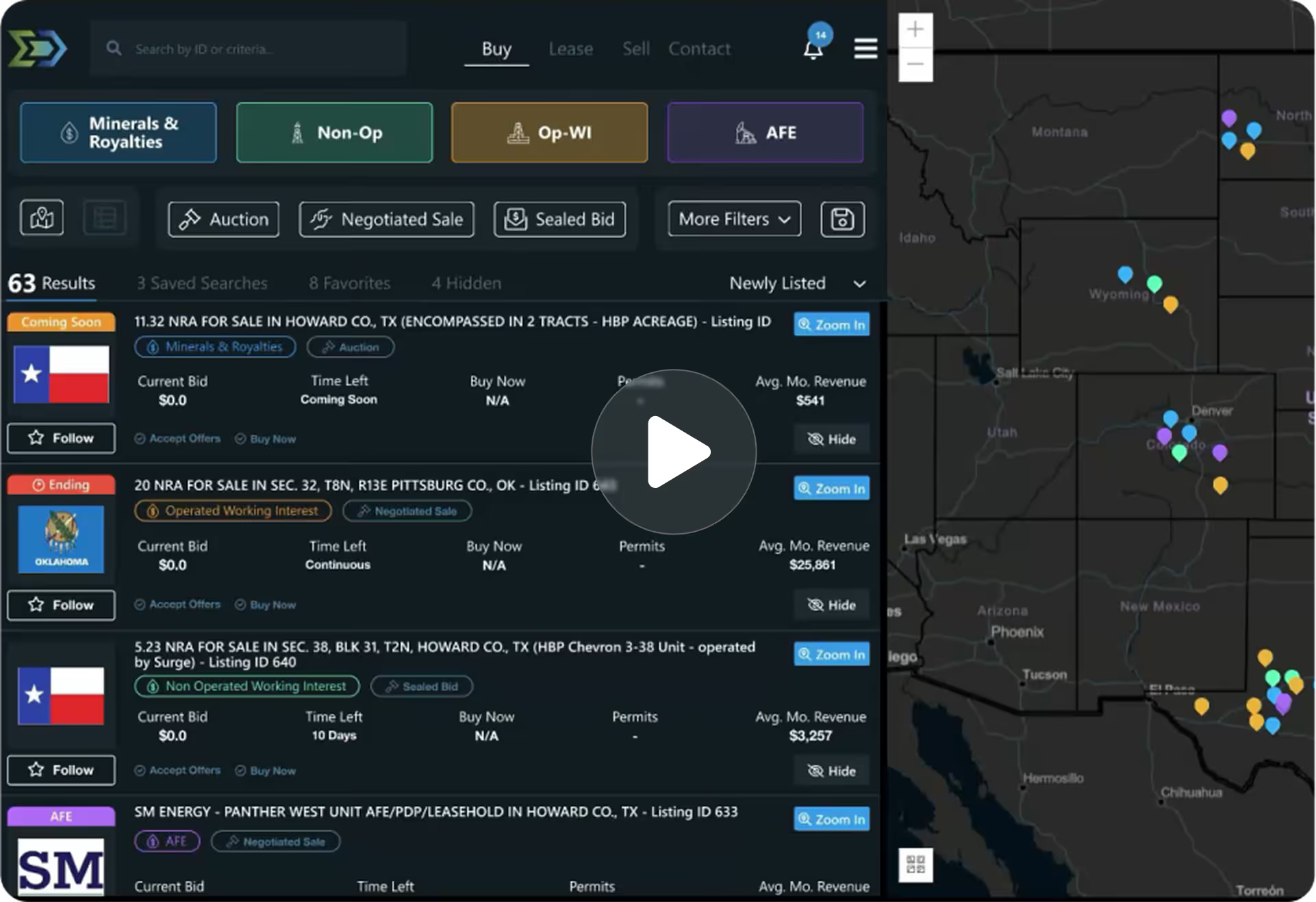
Browse active opportunities across minerals, royalties, working interests, and AFEs.
Lorem ipsum dolor sit amet, consectetur adipiscing elit, sed do eiusmod tempor incididunt ut labore et dolore magna aliqua. Ut enim ad minim veniam, quis nostrud exercitation ullamco laboris nisi ut aliquip ex ea commodo consequat. Duis aute irure dolor in reprehenderit in voluptate velit esse cillum dolore eu fugiat nulla pariatur.


Lorem ipsum dolor sit amet, consectetur adipiscing elit, sed do eiusmod tempor incididunt ut labore et dolore magna aliqua. Ut enim ad minim veniam, quis nostrud exercitation ullamco laboris nisi ut aliquip ex ea commodo consequat. Duis aute irure dolor in reprehenderit in voluptate velit esse cillum dolore eu fugiat nulla pariatur.
Lorem ipsum dolor sit amet, consectetur adipiscing elit, sed do eiusmod tempor incididunt ut labore et dolore magna aliqua.

Voluptates per vitae cum 2002 vestibulum tota aenean tincidunt congue. libero, dignissimos, cillum suspendisse dignissim ipsa perferendis dignissimos non
Direct engagement between buyer and seller. Offers, counteroffers, and terms managed on platform.
Confidential bids submitted privately. No reactive bidding. Seller reviews all bids after deadline.
Lorem ipsum dolor sit amet, consectetur adipiscing elit, sed do eiusmod tempor incididunt ut labore et dolore magna aliqua. Ut enim ad minim veniam, quis nostrud exercitation ullamco laboris nisi ut aliquip ex ea commodo consequat. Duis aute irure dolor in reprehenderit in voluptate velit esse cillum dolore eu fugiat nulla pariatur.
Lorem ipsum dolor sit amet, consectetur adipiscing elit, sed do eiusmod tempor incididunt ut labore et dolore magna aliqua. Ut enim ad minim veniam, quis nostrud exercitation ullamco laboris nisi ut aliquip ex ea commodo consequat. Duis aute irure dolor in reprehenderit in voluptate velit esse cillum dolore eu fugiat nulla pariatur.
Get the answers to the most commonly asked questions. If you need more information, don't hesitate to reach out!
Questions not covered here? Contact us at contact@energydomain.com or book a walkthrough at energydomain.com.
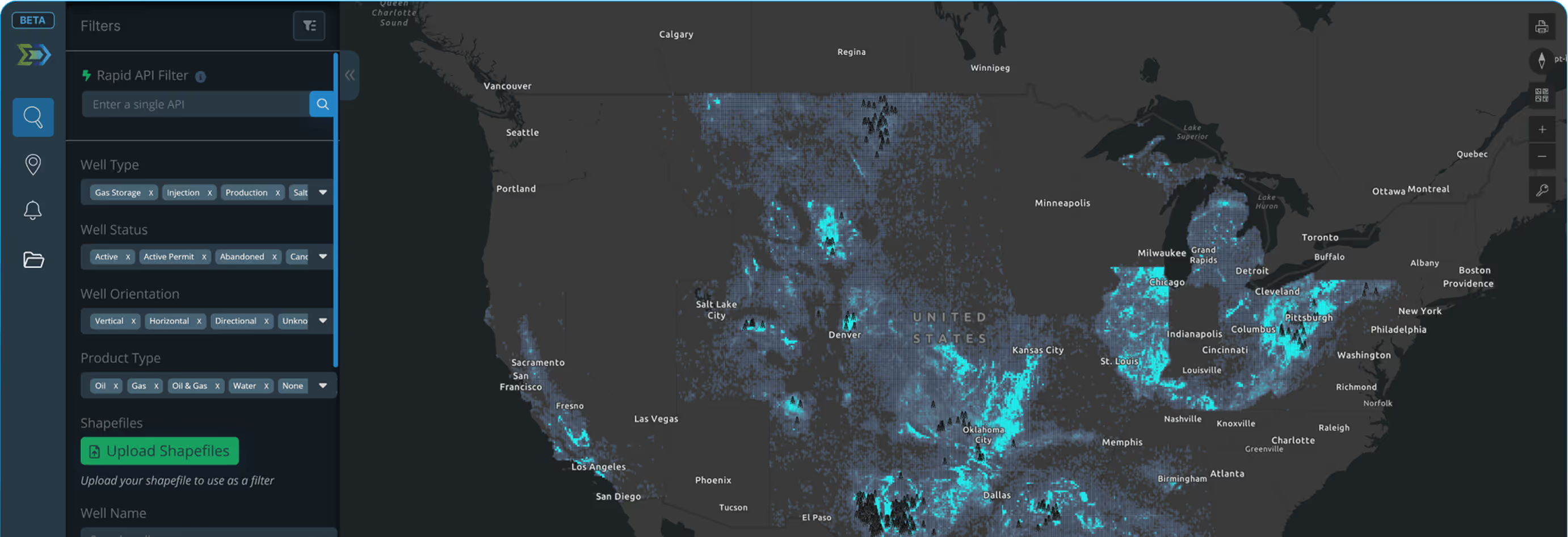
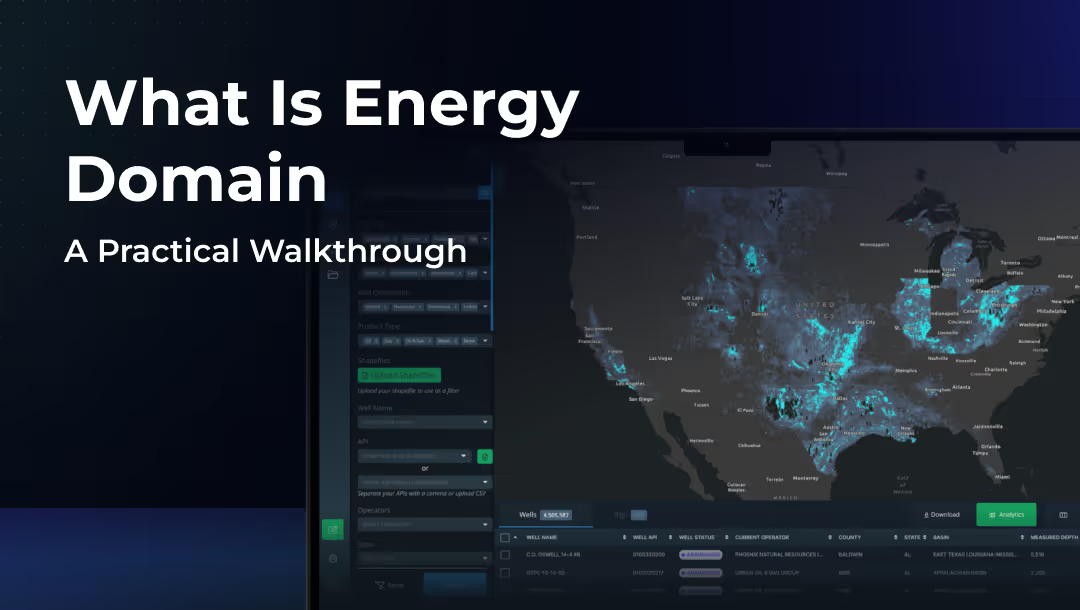
Energy Domain is an innovative platform designed to facilitate the buying, selling, and leasing of oil and gas properties, including mineral, royalty, and working interests. It offers a technology-focused approach to improve transaction efficiency by integrating data, analytics, and automated listing services.
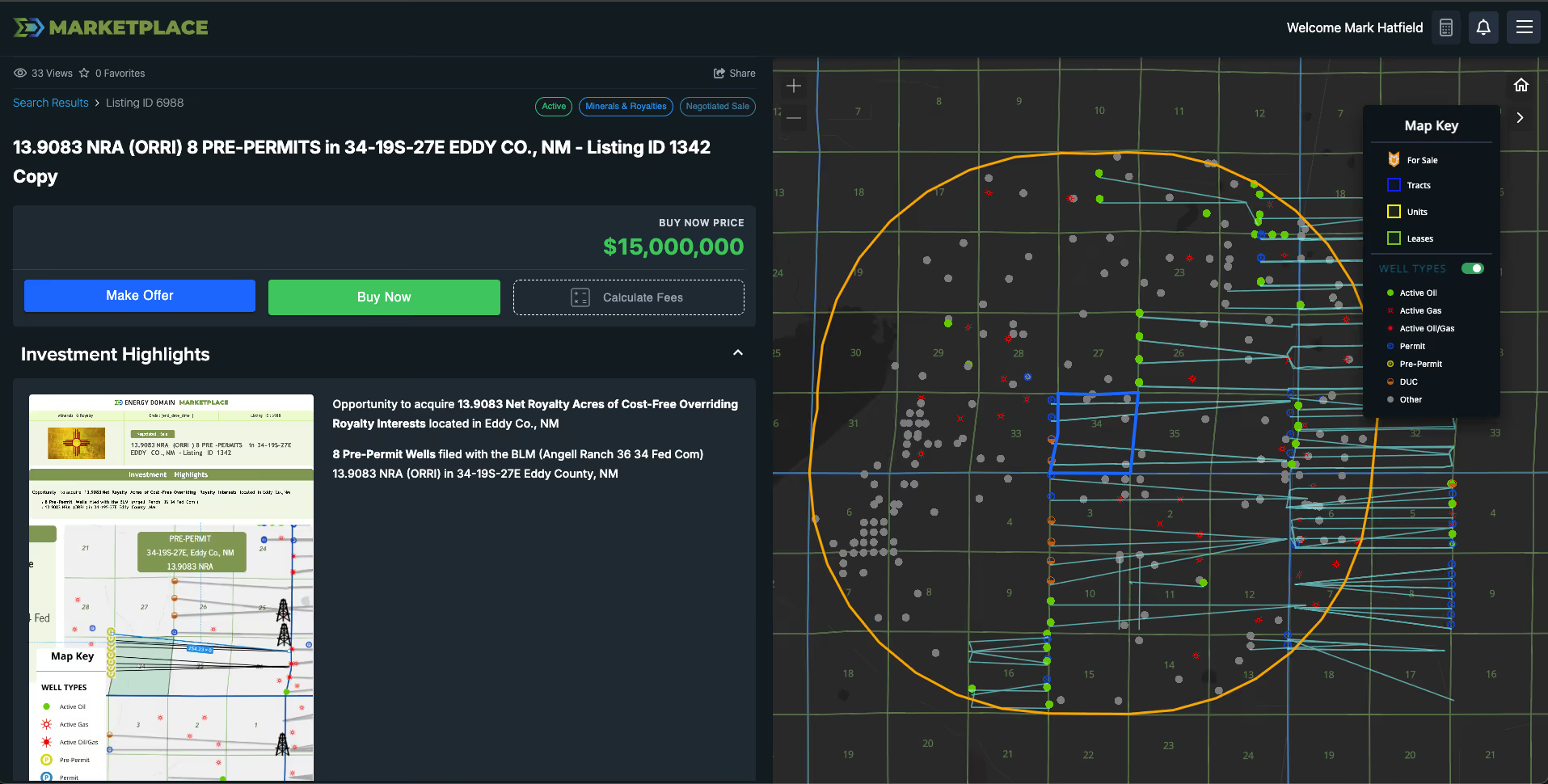
Our automated listing service allows sellers to quickly post their assets for sale by uploading checks, conveyance documents, and leases. The platform automatically associates revenue data with wells, maps the tracts, and completes the listing in a few simple steps.
Sellers have three options to market their assets: buy now, auction, or continuous listing. This flexibility allows sellers to enter the market on their own terms and choose the method that best suits their needs.
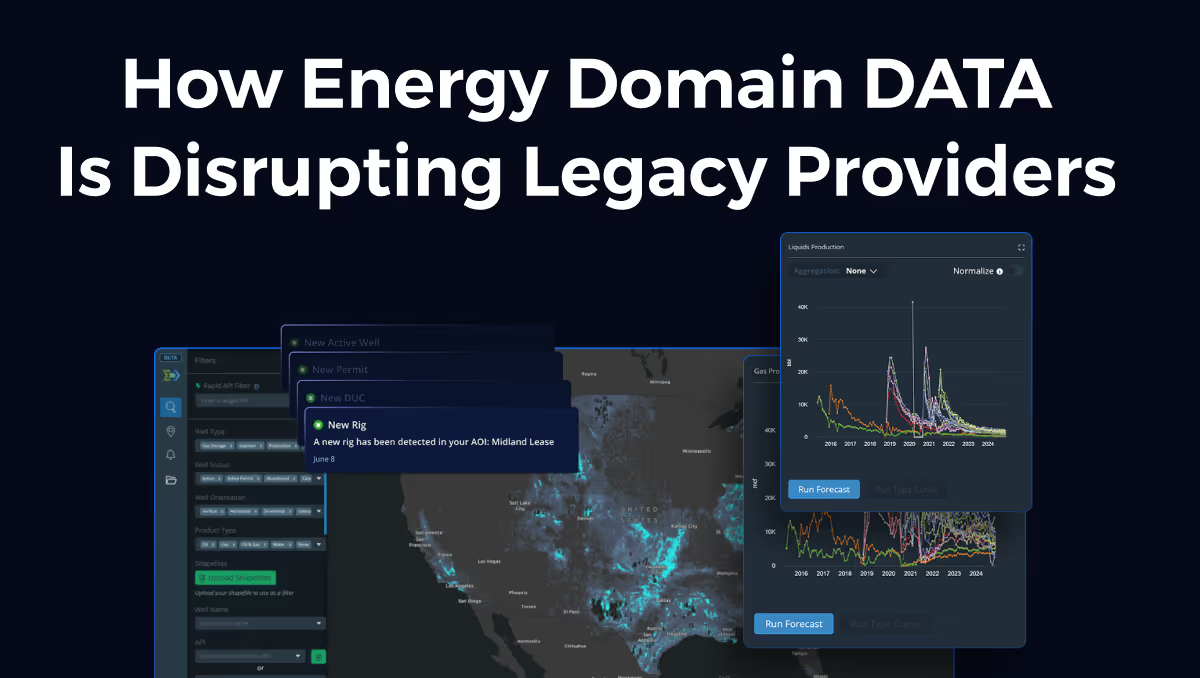
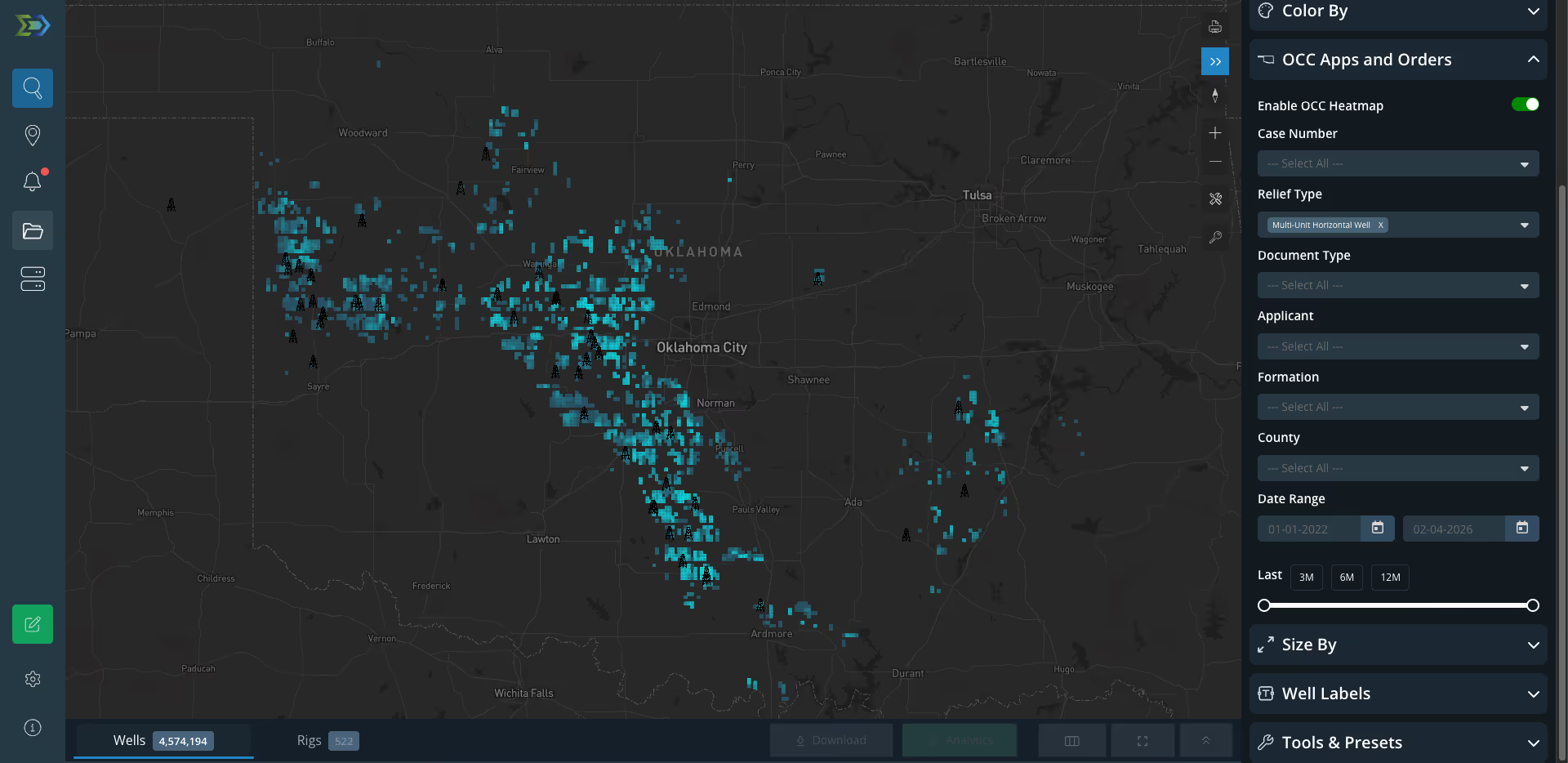
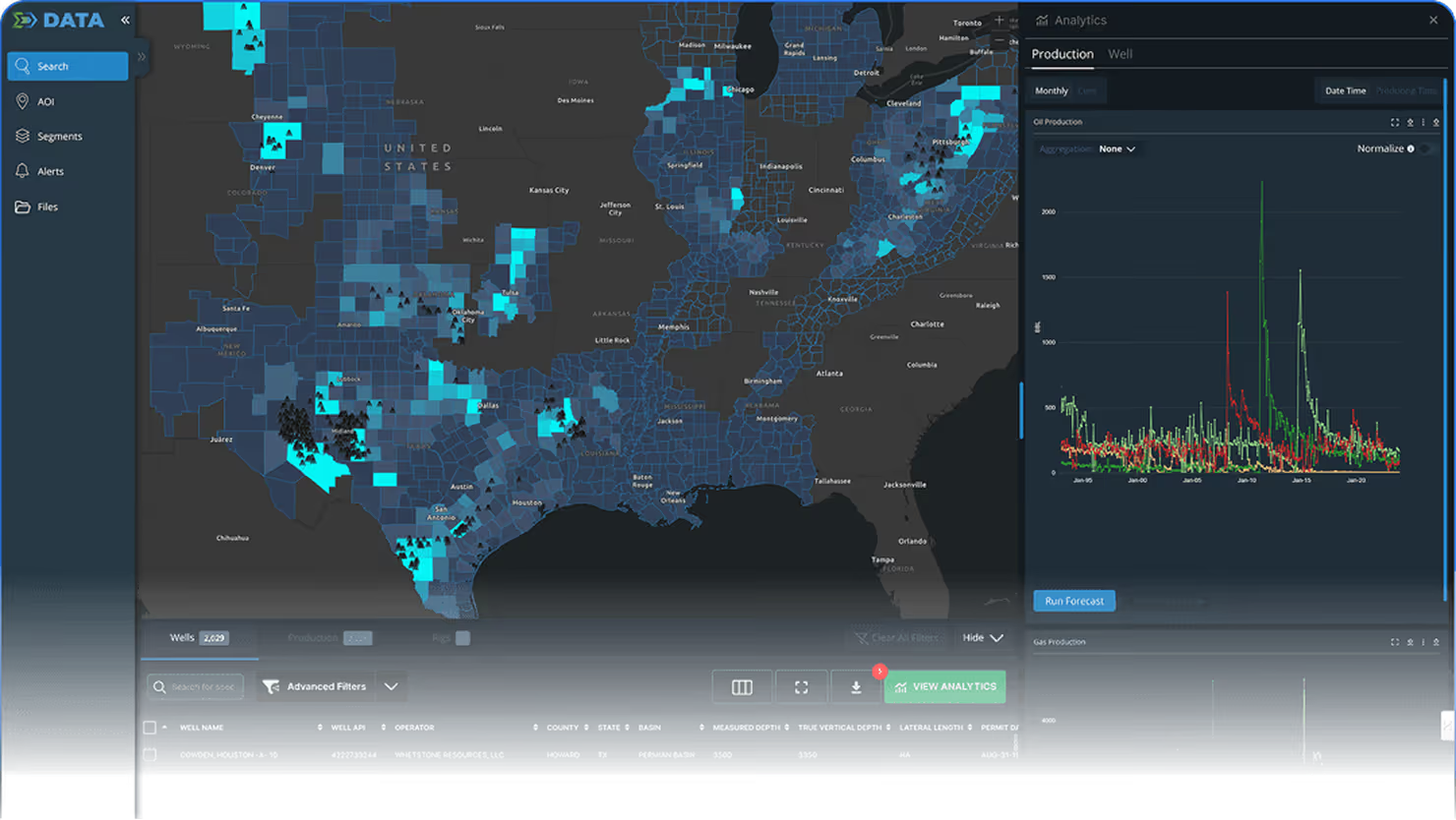
Energy Domain integrates nationwide well data, production data, and other relevant analytics to help users evaluate and transact deals with unprecedented efficiency. This comprehensive approach ensures informed decision-making for both buyers and sellers.
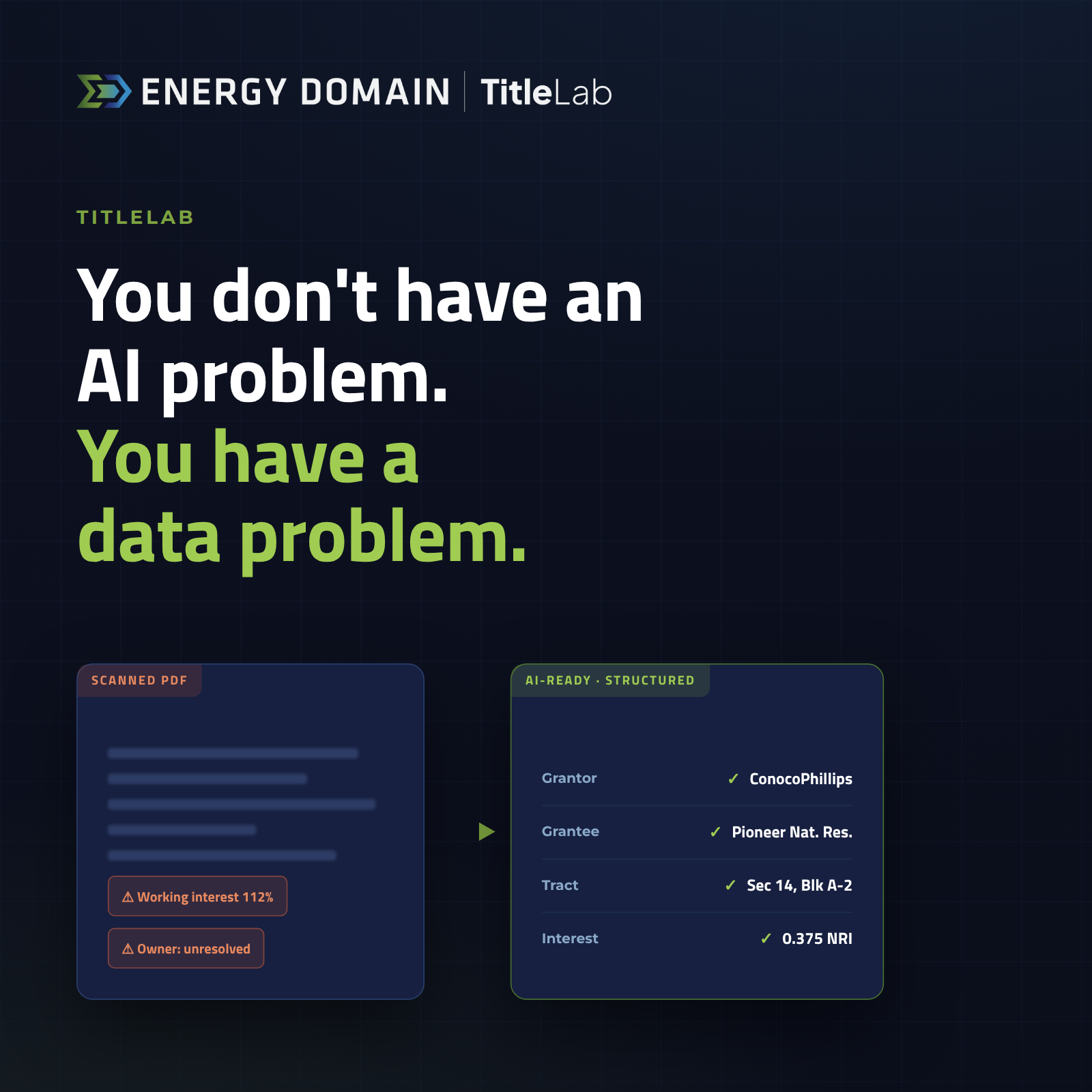
Most providers build their index from the clerk-supplied CSV — a handful of fields per instrument, often only the first few parties on larger transactions. When a deed covers 75 tracts, legacy providers may capture four. Your runsheet is incomplete before you’ve started.
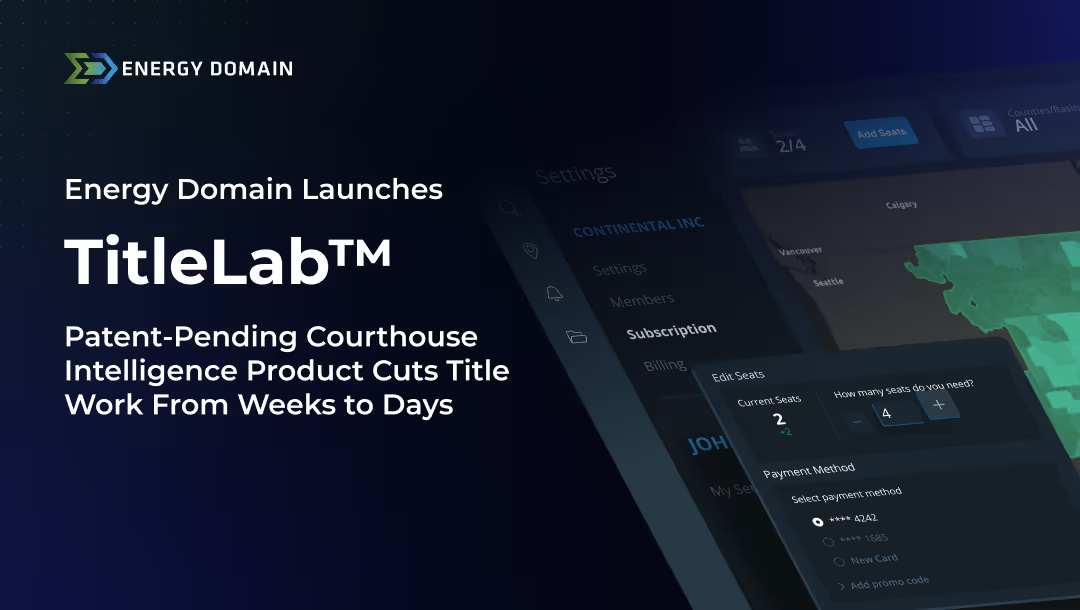
TitleLab processes the underlying document, not the clerk index. Every instrument runs through our extraction engine, which classifies the document type, captures every grantor and grantee with their transaction role, parses the full legal description, and extracts lease provisions including royalty rates, term lengths, and severance clauses. We extract two to three times the attributes legacy providers abstract, and every property element is structured, searchable, and mappable.
It depends on the dataset. Core state-reported production and well headers update on each state agency’s reporting schedule. Well statuses are event-driven and update daily. Rig locations update daily, with intra-day updates in active areas. Derived datasets — production allocations, Confirmed Intervals, calculated headers — re-run as new well tests and state records arrive, so estimates improve continuously. Texas mineral appraisal data updates annually with county appraisal district releases.
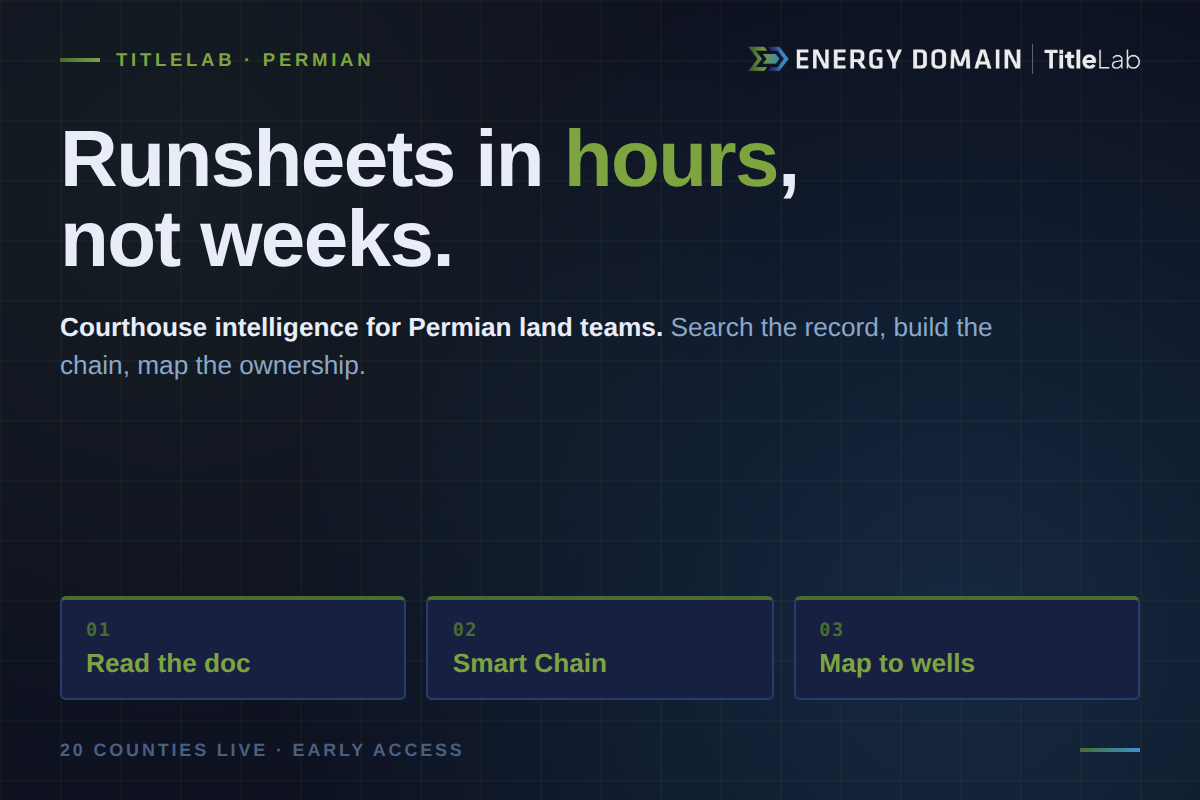
The Advanced Index is the structured data layer TitleLab builds on top of raw county records. A standard clerk index gives you a few fields — grantor, grantee, book/page, effective date. The Advanced Index surfaces the full extraction: instrument type, all parties with roles, normalized legal descriptions mapped to distinct tracts, lease provisions, prior instrument references, and direct links to API numbers and unit names.
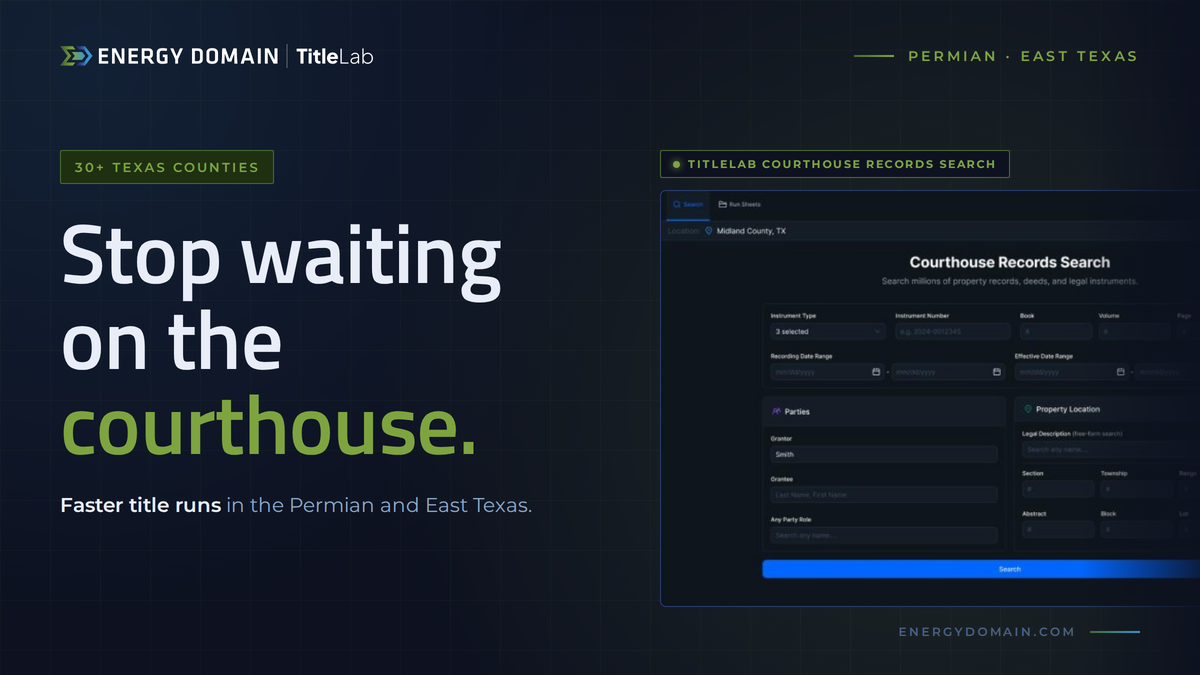
Search by section, survey, abstract, or party name across the complete record set and get structured results back instead of a stack of documents to read manually.
Yes. DataStream Direct is our JDBC connector, built for direct integration with BI tools like Spotfire. Authenticate against your subscription — county, basin, or nationwide — and pull data at whatever cadence your workflow requires. Snowflake connectivity is also supported for teams running enterprise data lake environments.
A SQL-based query API is in development with a goal of making it available to all subscribers at low or no additional cost. Contact us for early access.
Approximately 65% of our rig locations come directly from drilling contractors through relationships established when we acquired a rig data business. The remaining coverage runs through satellite imagery — we geofence permitted pad sites and run imagery daily. Coverage runs 94–99% against the Baker Hughes count on any given day.
State regulatory data is the foundation for well headers, production volumes, and lifecycle statuses. On top of that we layer drilling contractor filings and satellite imagery for rig locations, FracFocus for completion data, New Tech/Thompson Z-Map formation tops for Confirmed Interval identification, and Texas county appraisal rolls and tax records for mineral appraisal data. Operator and reservoir names are normalized across inconsistent state and operator reporting so data connects cleanly regardless of how it was originally filed.
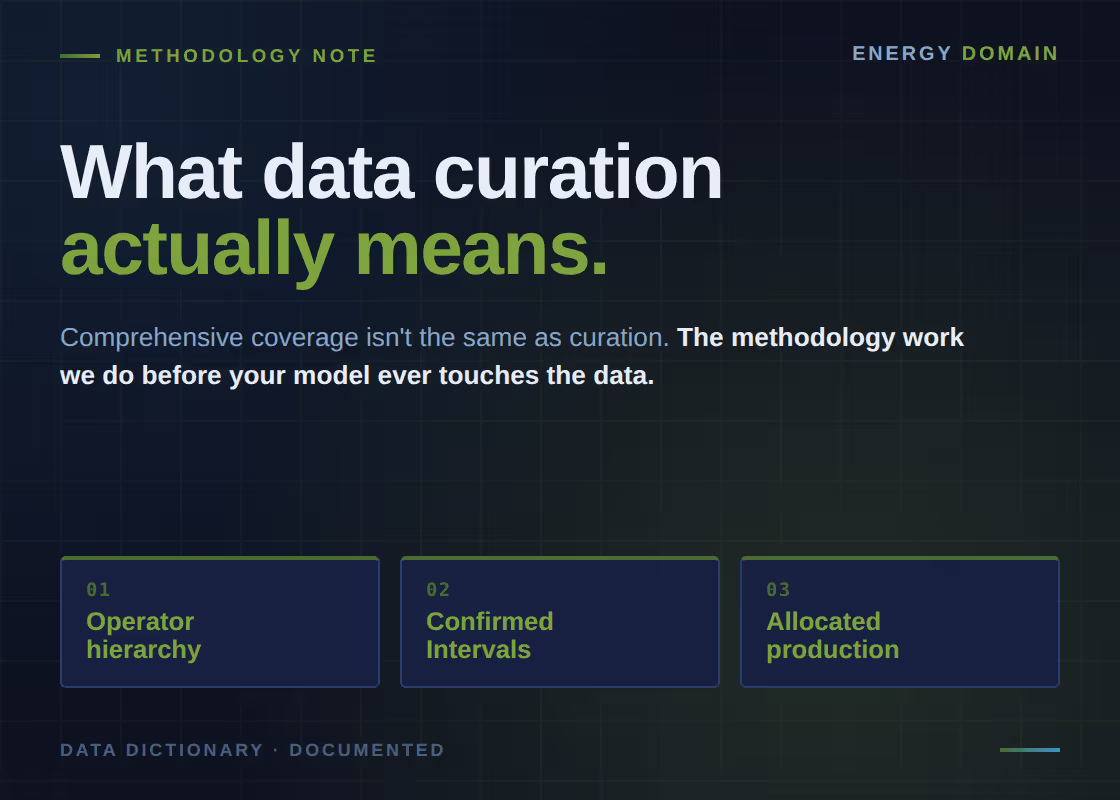
We programmatically land every horizontal well with a directional survey at the micro-reservoir level using a comprehensive formation tops and Z-Map dataset. The Confirmed Interval identifies the primary formation a well is landed in — specifically the interval where 51% or more of production originates.
In the Permian, that means filtering by Wolfcamp A, B, C/D, Spraberry second bone, third bone, and similar targets with specificity. This is a proprietary derived dataset, not a pass-through of the state-reported target formation field, which is often incomplete or missing.
We offer subscriptions by county, basin, or nationwide, on monthly or annual terms, with no long-term contracts and no enterprise negotiation required. You manage your subscription and seat allocations directly in the platform. Texas mineral appraisal data and tax rolls are included at no additional cost.
Pricing is built to be accessible to independent operators and smaller shops historically priced out of enterprise data contracts — without cutting corners on data quality or methodology.
Texas and Louisiana report production at the lease level, not the well level. When multiple commingled wells produce to the same tank battery, only the lease total reaches the state. To get to well-level production — what you need for type curve analysis, decline curve forecasting, PDP valuation, and reserves estimation — that lease total has to be allocated across the contributing wells.
Our methodology is built on three principles: volume conservation (allocated well-level production always sums exactly to the reported lease total), test-based allocation (well tests provide direct measurements that drive the proportional distribution), and state-appropriate methods (Louisiana’s records include explicit temporal data; Texas does not, so we use a Well Date Finder algorithm that synthesizes completion timing, production peaks, and other signals).
Confidence varies and is transparent. Single-well leases are definitive. Multi-well leases with dense test coverage are high confidence. Sparse test data or active drilling introduces more uncertainty, and we document that rather than obscuring it. Allocations re-run as new well tests arrive, so historical estimates improve over time.