0 Results for ""

TitleLab
Courthouse intelligence for upstream land teams.
Land teams spend weeks pulling courthouse records, building runsheets in spreadsheets, and cross-referencing legal descriptions across disconnected systems. A single title opinion can require days of document retrieval, manual data entry, and chain-of-title reconstruction, driving cost, delay, and risk under tight transaction deadlines.
Faster underwriting. Fewer title defects at closing. Lower cost per deal.

NOW AVAILABLE !
Trusted by operators, non-op buyers, mineral aggregators, and A&D advisors across the upstream market.






The current workflow is slow, incomplete, and error-prone.
Index Data Is Unreliable
County clerk indexes have gaps. Legal description fields vary by clerk and by day. Standard searches return partial results. Landmen end up manually augmenting every runsheet before it is usable.
Manual Work at Every Step
Document retrieval, data entry, and chain-of-title reconstruction are all done by hand. A single title opinion can take days of this work before underwriting begins.
Courthouse Data Is Scattered
Courthouse data exists across 254 counties in Texas alone. It is unstructured and scattered. There is no single place to search, retrieve, and act on it without building your own process.
"Courthouse data exists. The problem is that it's unstructured and scattered across 254 counties in Texas alone. TitleLab makes that data usable. A landman can now build a comprehensive runsheet in hours instead of weeks, and see that data on a map next to production and well information. That changes the economics of how deals get done."

Ben Heinzelmann
CEO, Energy Domain

Automates runsheet construction and chain-of-title analysis.
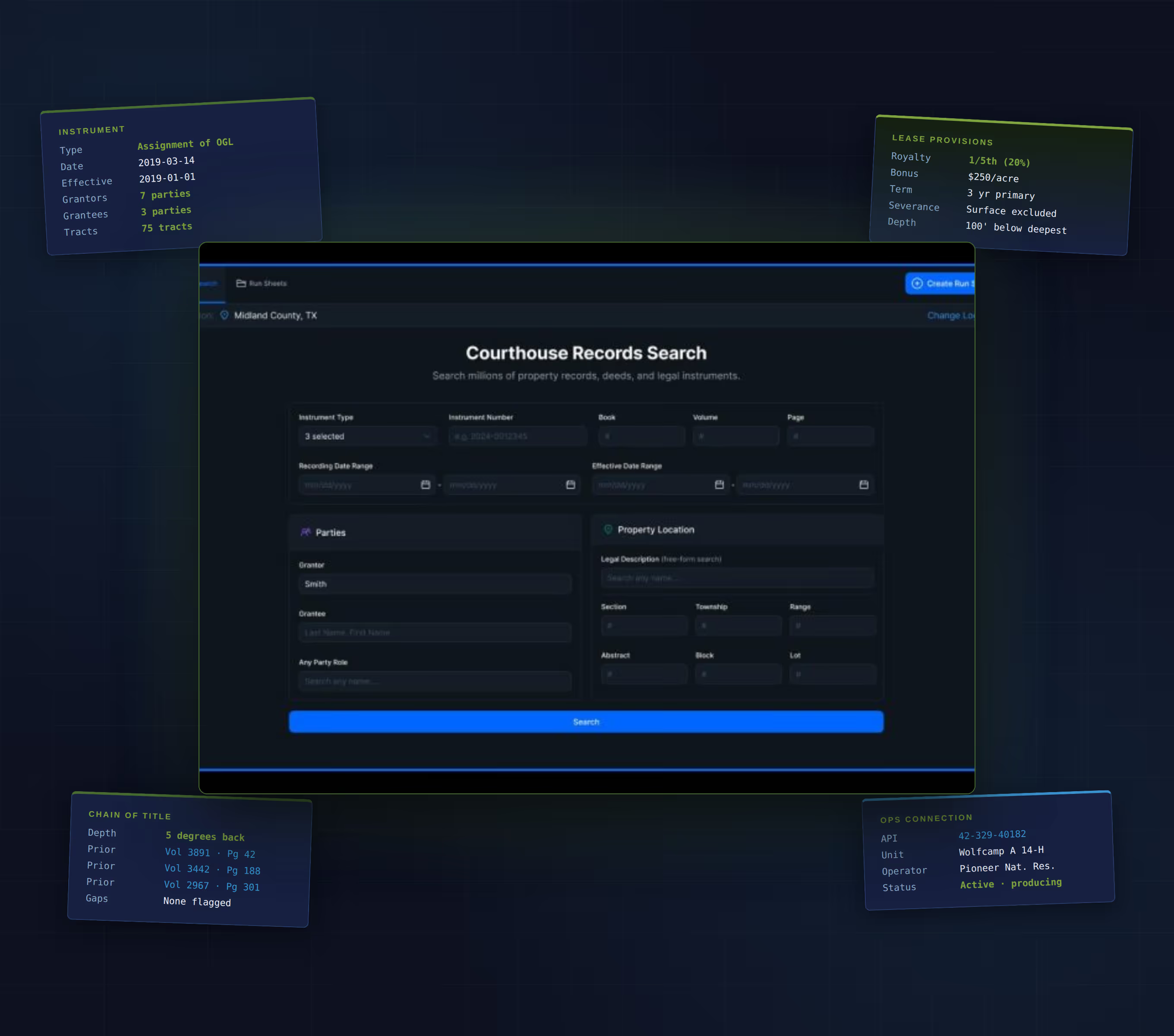
TitleLab aggregates county-level records and runs all documents through a model that extracts every legal description, party, dates, prior references, and other important clauses. Landmen no longer have to use unreliable index data.

Document Processing
Automatically classifies instruments, extracts all parties with their roles (grantor/grantee), parses legal descriptions, and captures lease provisions including royalty rates, terms, and severance clauses. Processes deeds, assignments, leases, liens, and probate documents.
Legal Description Parsing
Texas surveys and abstracts, PLSS coordinates, and platted properties -- structured and normalized into distinct property tracts. Each tract is georeferenced and linked to producing assets for immediate visualization of ownership coverage.
Chain-of-Title Construction
Smart Chain technology automatically builds runsheets by capturing documents with matching legal descriptions and pulling prior referenced instruments back through five degrees of separation, including legacy book/volume/page citations. Identifies gaps and flags potential defects.
Integrated with Energy Domain Data
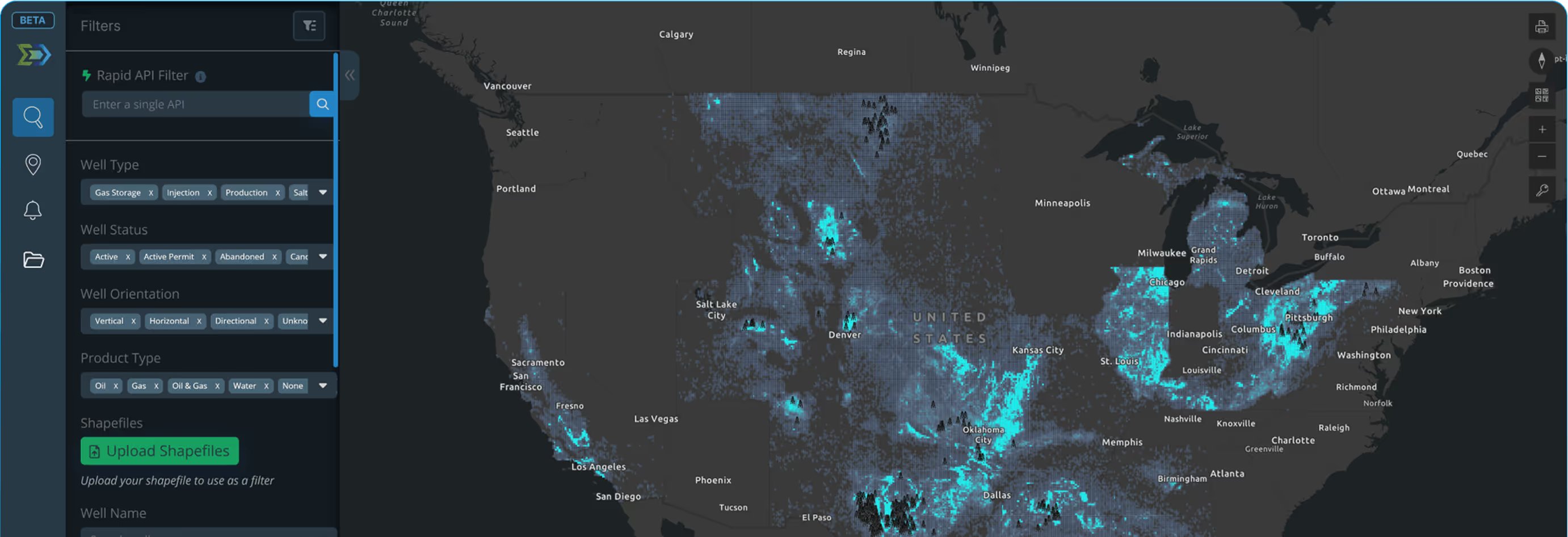
Documents connect directly to API numbers, unit names, and lease names. Users move from ownership verification to economic analysis without switching systems, supporting screening, due diligence, closing, development planning, and ongoing portfolio management.
The upstream professionals who make title decisions.
Independent Landmen
O&G
Attorneys
Mineral Brokers
Abstract Companies
Operator Land Departments
Mineral Acquisition Funds
A&D
Teams
PE-Backed Energy Firms
What TitleLab does.
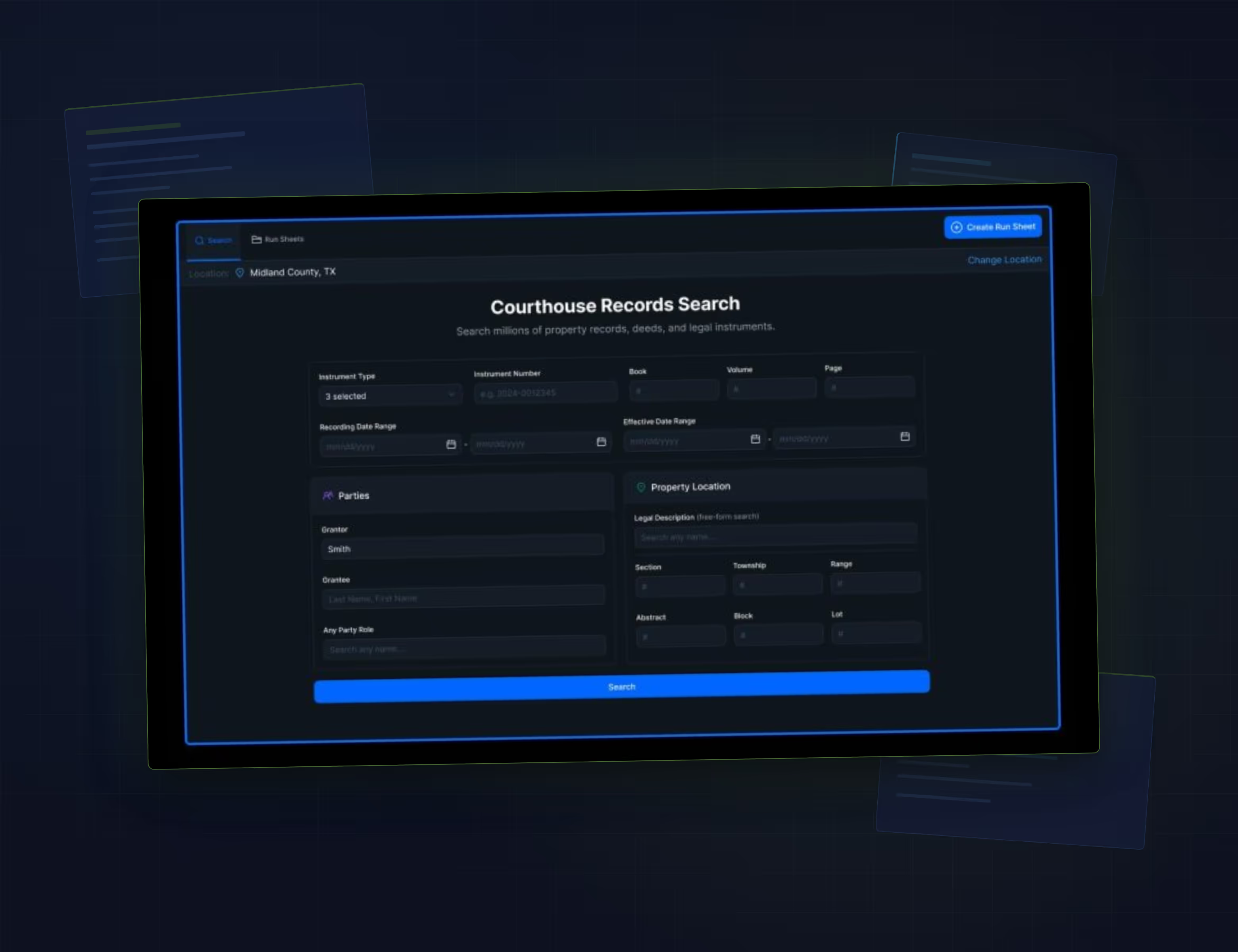
- Instrument classification -- 90+ document types
- Party extraction with grantor/grantee roles
- Legal description parsing (surveys, abstracts, PLSS, platted properties)
- Lease provision capture: royalty rates, terms, severance clauses
- Deeds, assignments, leases, liens, and probate documents
- Prior referenced instruments pulled back through five degrees of separation
- Legacy book/volume/page citation linking
- Gap identification and defect flagging
- Direct connection to API numbers, unit names, and lease names
- Map visualization of ownership coverage next to wells and production data
Request Access
Talk to us about bringing TitleLab into your land workflow.
energydomain.com | 817-928-3322


Got questions? We’ve got answers.
Get the answers to the most commonly asked questions. If you need more information, don't hesitate to reach out!
Questions not covered here? Contact us at contact@energydomain.com or book a walkthrough at energydomain.com.
© 2026 Energy Domain · Fort Worth, TX