0 Results for ""

Allocated Production
Well-level production estimates built on volume conservation and empirical well test data.
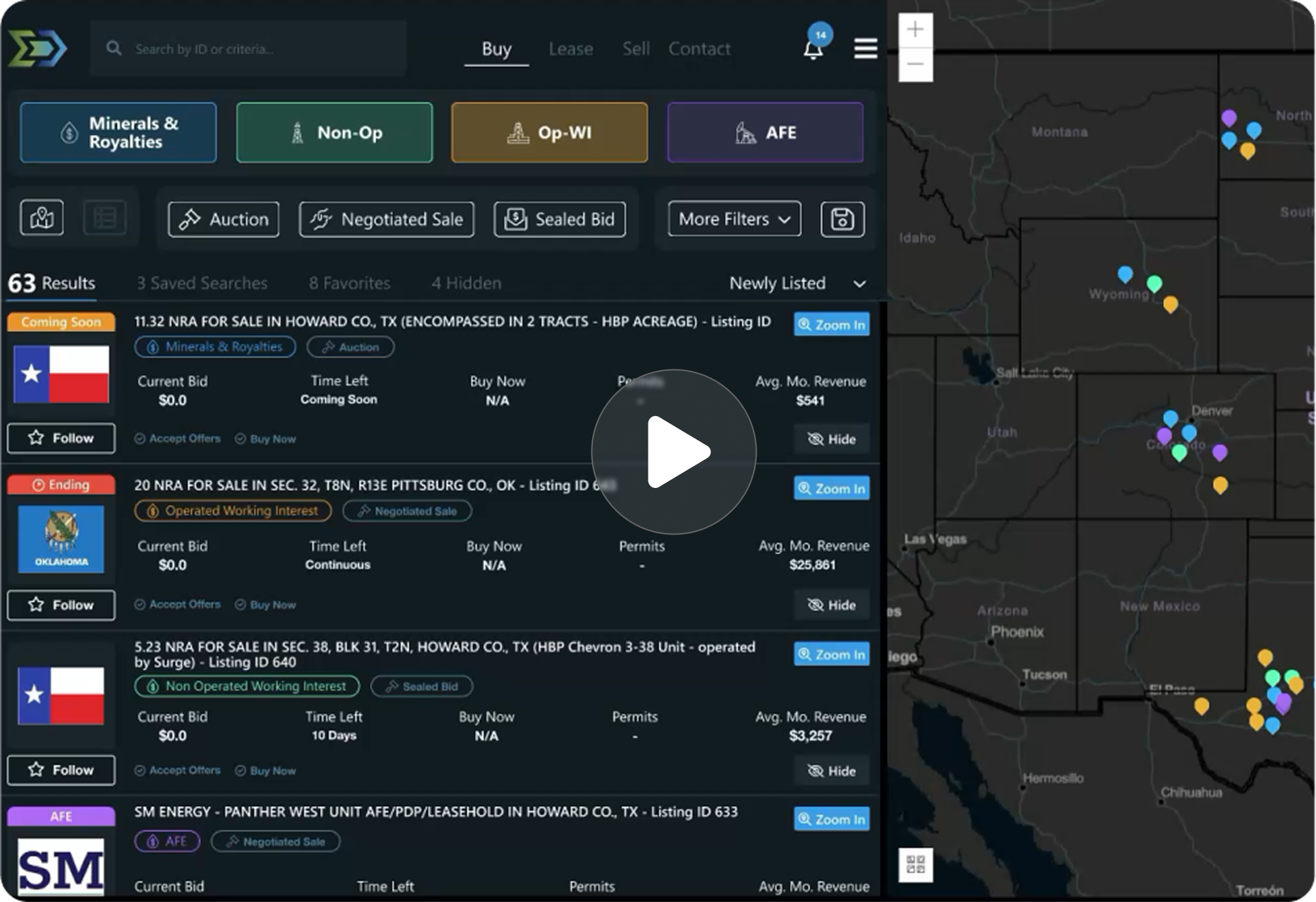
Trusted by operators, non-op buyers, mineral aggregators, and A&D advisors across the upstream market.






Overview
In Texas and Louisiana, oil and gas production is frequently reported at the lease level. When multiple wells produce from a single lease, their volumes are commingled and measured at a common point (tank battery or separator). The state records a single number. Engineers, acquirers, and analysts need well-level granularity to perform type curve analysis, decline curve forecasting, reserves estimation, and asset valuation.
Energy Domain’s allocation methodology distributes lease-level volumes across individual contributing wells using well test data as the evidentiary foundation. The process is governed by volume conservation: the sum of all allocated well-level production always equals the original lease-level total. No volume is created or lost.
The methodology adapts to state-specific data environments. Louisiana provides explicit start and end dates for each well’s production on a lease through production grouping records, plus quarterly well tests. Texas requires algorithmic estimation of temporal boundaries through our Well Date Finder engine, working with annual well tests. Both states proceed through identical core allocation logic: build type curves from test data, calculate proportional allocation factors, and distribute lease production accordingly.
Allocations are living estimates. As new well tests arrive, as operators revise historical production, and as Texas production patterns clarify over time, allocations are re-run to incorporate the best available information.
Key Fields
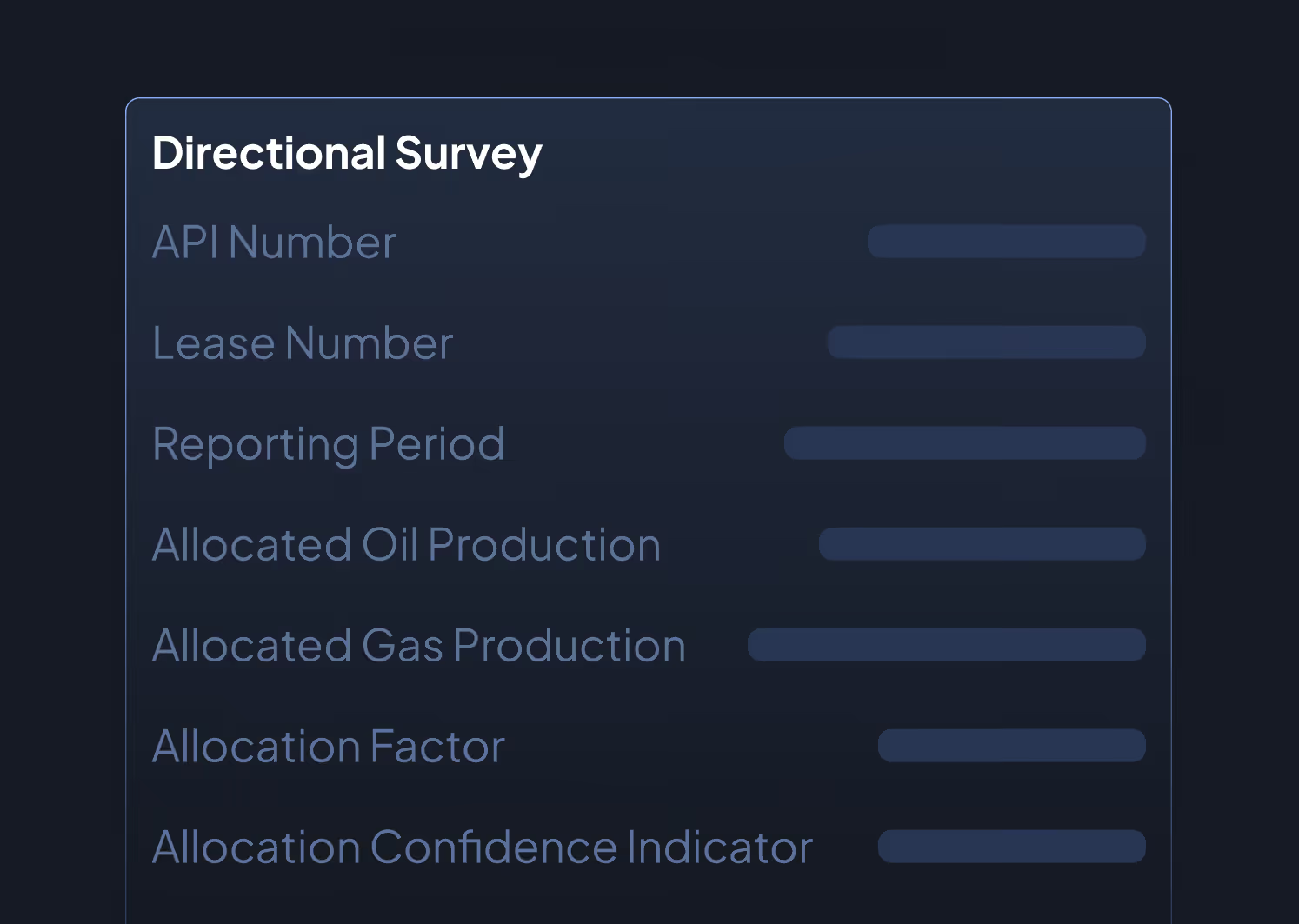
- API Number
- Lease Number
- Reporting Period (month/year)
- Allocated Oil Production (bbls)
- Allocated Gas Production (mcf)
- Allocation Factor (well’s proportional share of lease production)
- Allocation Confidence Indicator
- Well Test Date(s) Used
- Number of Wells on Lease
- Lease-Level Total (for validation)
Data Sources & Update Frequency
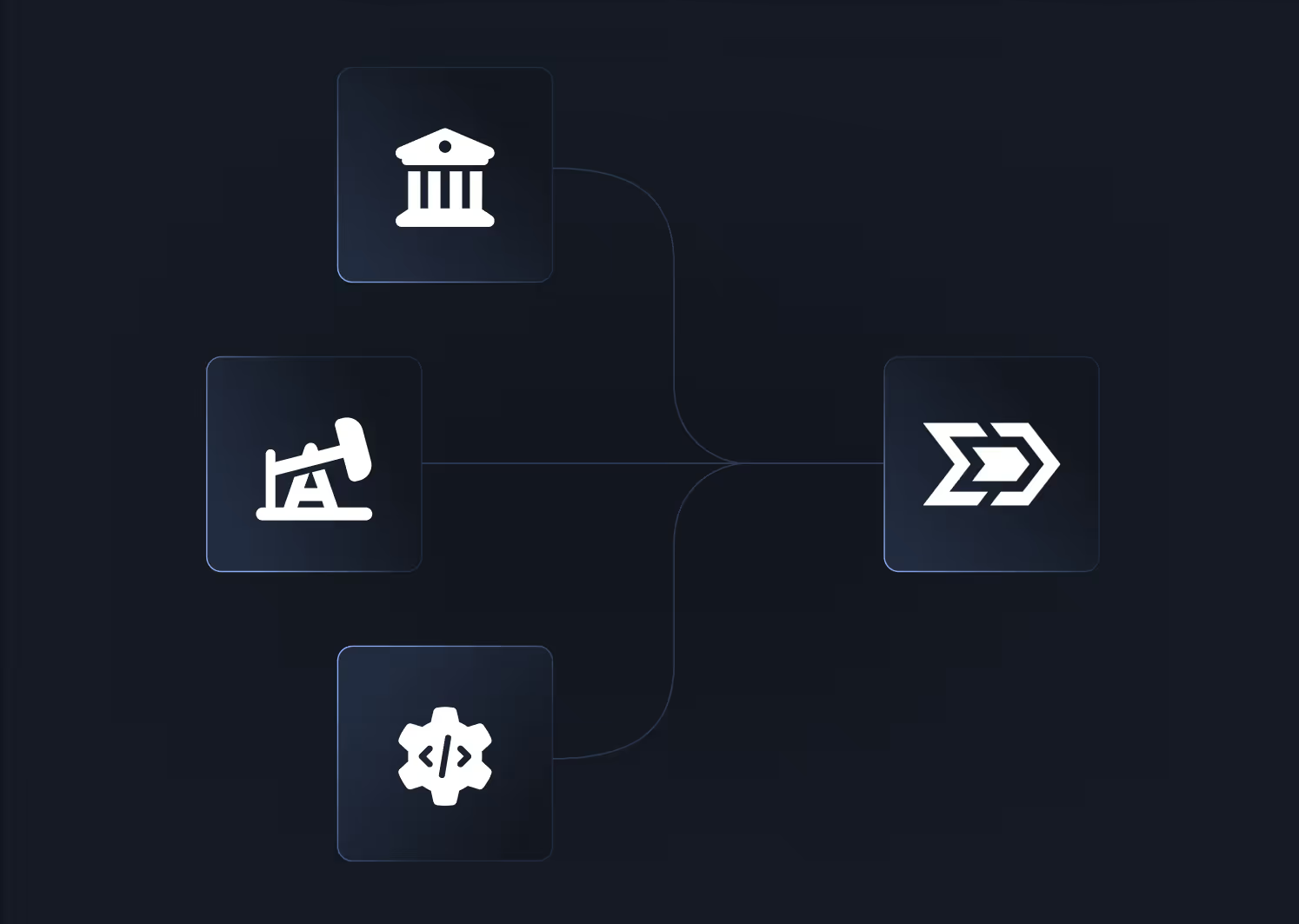
Derived from state-reported lease-level production, well test data (Texas RRC and Louisiana SONRIS), and Energy Domain’s proprietary allocation engine. Allocations are recalculated as new well tests are received and as operators revise production reports.
Who Uses This
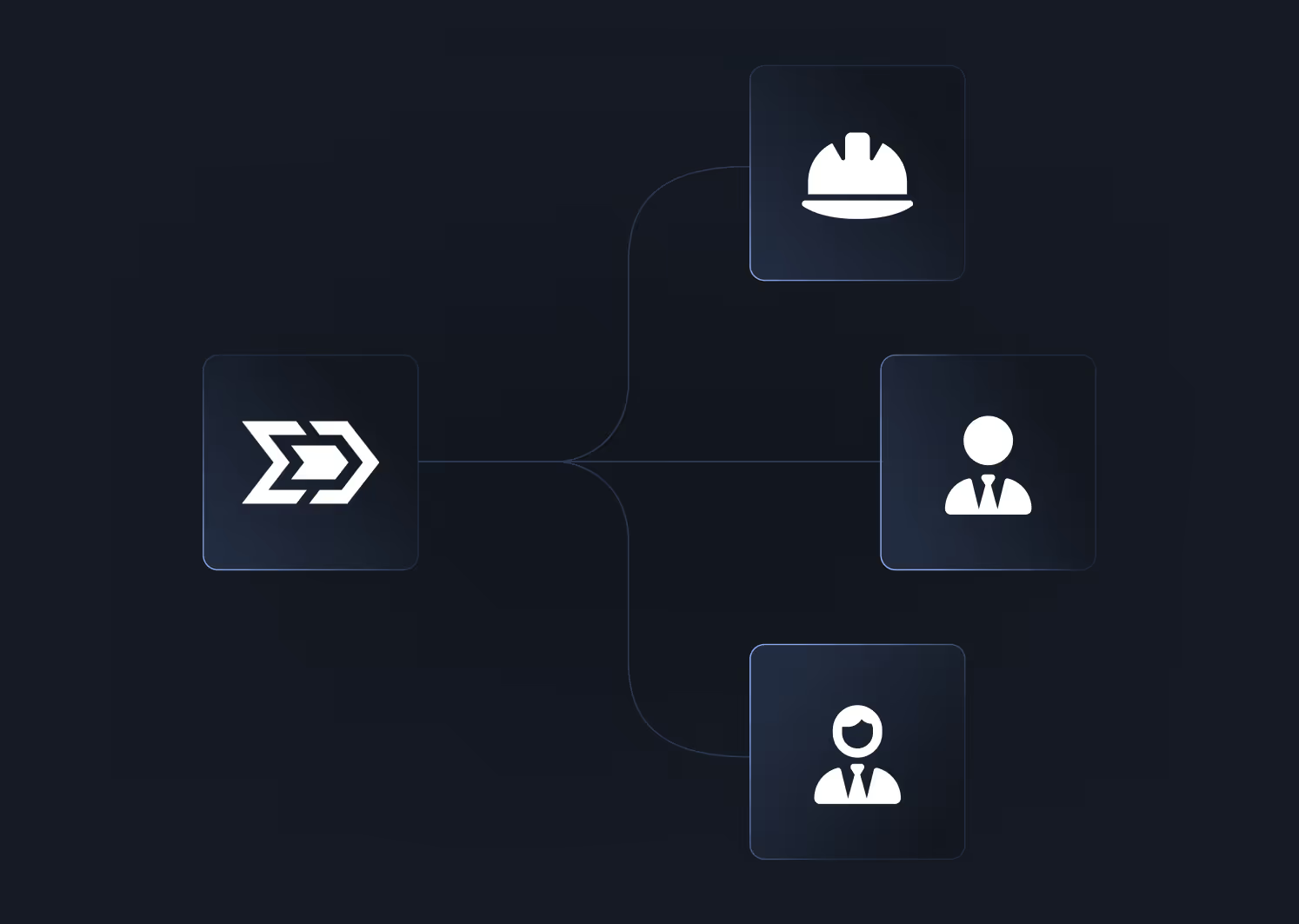
Reservoir Engineers require well-level production to build individual well decline curves, compare offset performance, and generate defensible EUR estimates. Lease-level data cannot support this analysis.
Mineral Aggregators and Non-Op Acquirers use allocated production to underwrite individual well economics when evaluating fractional interests on multi-well leases.
A&D Advisory Firms rely on well-level production to prepare data rooms, validate seller representations, and build offering memoranda with granular performance detail.
Portfolio Managers monitor well-level performance across mineral and royalty portfolios, identifying declining wells or outperformers at the individual asset level.
Why It Matters
Lease-level production data is a starting point, not an answer. If you are underwriting a Midland County acquisition with 14 wells on a single lease, you need to know which wells are carrying the economics and which are declining. Our allocation methodology (volume-conserved, test-based, state-adapted, and continuously refined) delivers that granularity with a transparent methodology you can explain to your investment committee. Energy Domain publishes a full white paper detailing the allocation methodology, including state-specific differences, confidence tiers, and the Well Date Finder algorithm.


.png)















© 2026 Energy Domain · Fort Worth, TX